
News
Crypto legislation is a positive step, but consumers still face risks
MiCAR, the European crypto regulation, has brought the crypto market a significant step closer to maturity, but adequate consumer protection remains a challenge and could be strengthened. In this highly competitive market, providers sometimes lose sight of customers' interests. That is the impression of the Dutch Authority for the Financial Markets (AFM) in an assessment of the crypto market eighteen months after the regulation came into force. We believe that services such as staking, lending and certain decentralised finance (DeFi) should also be brought within the scope of supervision.
In short
- Sustainable consumer protection through stronger and more European supervision
- Dutch people are increasingly holding crypto, but risks remain
- Consumers do not always receive appropriate products
- Lack of supervision of staking, lending and DeFi services
Sustainable consumer protection through stronger and more European supervision
Stronger and more centralised European supervision is necessary to ensure sustainable consumer protection. The cross-border nature of the crypto market calls for further harmonisation of rules and supervision, a greater role for the European Securities and Markets Authority (ESMA) and consistent application of MiCAR in the European Union. Only through forward-looking and centralised European supervision can we ensure that innovation goes hand in hand with a high level of consumer protection.Dutch people are increasingly holding crypto, but risks remain
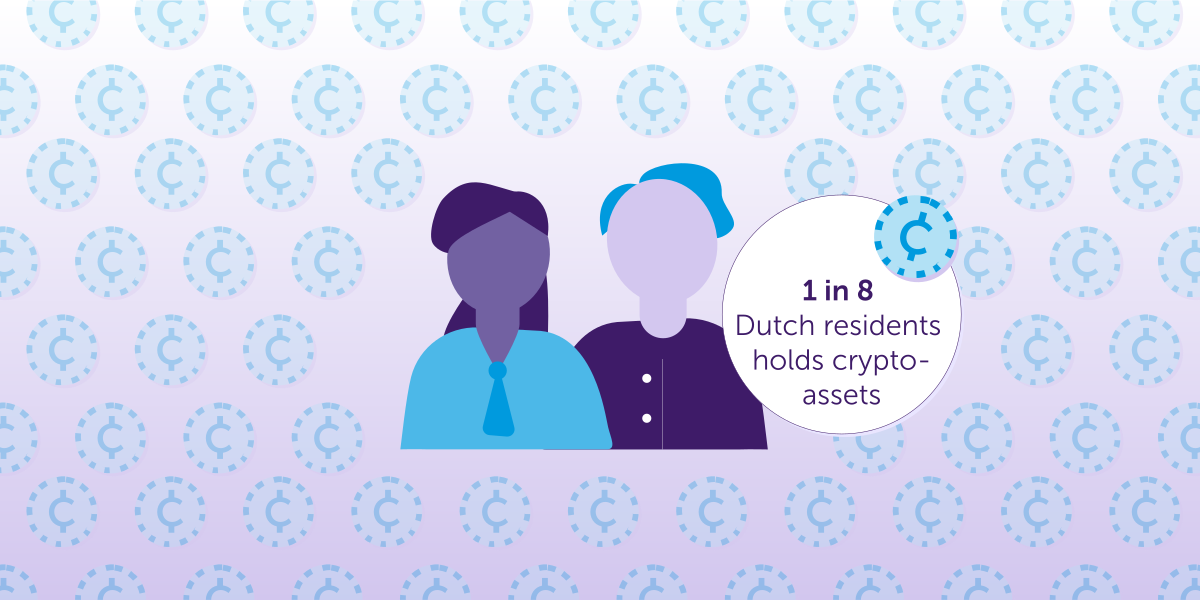
Effective consumer protection is all the more important given that crypto holdings are on the rise in the Netherlands. Around one in eight people in the Netherlands now hold crypto-assets. Although most consumers only invest small amounts, the risks remain significant. Crypto-assets are often highly volatile and many consumers have difficulty fully understanding the risks associated with complex products and services. Competition in Europe means that providers sometimes lose sight of customers' interests. Furthermore, consumers are regularly confronted with fraudulent or misleading crypto-assets, such as pump-and-dump schemes. The risks are exacerbated by the wide variety of crypto-assets and the ease with which new tokens can be created.Consumers do not always receive appropriate products
Combining ‘new’ services such as crypto trading with traditional financial services such as investing or payments can lead to confusion because different levels of supervision apply to the various products and services. For example, MiCAR does not include any product management obligations to ensure that products meet consumer needs, as is the case with many other products. Many crypto-assets and crypto services are difficult for consumers to assess and not always appropriate.Lack of supervision of staking, lending and DeFi services
Staking, lending and certain decentralised finance (DeFi) services have become commonplace in the crypto sector but fall entirely or partly outside the scope of MiCAR. As a result, there are no specific rules governing aspects such as liquidity management, risk control and the use of collateral, and consumers do not always understand which protections do or do not apply. It makes sense to bring staking, lending and certain DeFi activities explicitly within the scope of appropriate rules.Contact for this article
Would you like to receive the latest news from AFM?
Subscribe to our newsletter, we will keep you up-to-date.