
News
09/07/26
Strengthen internal quality reviews for better insight into the quality of statutory audits
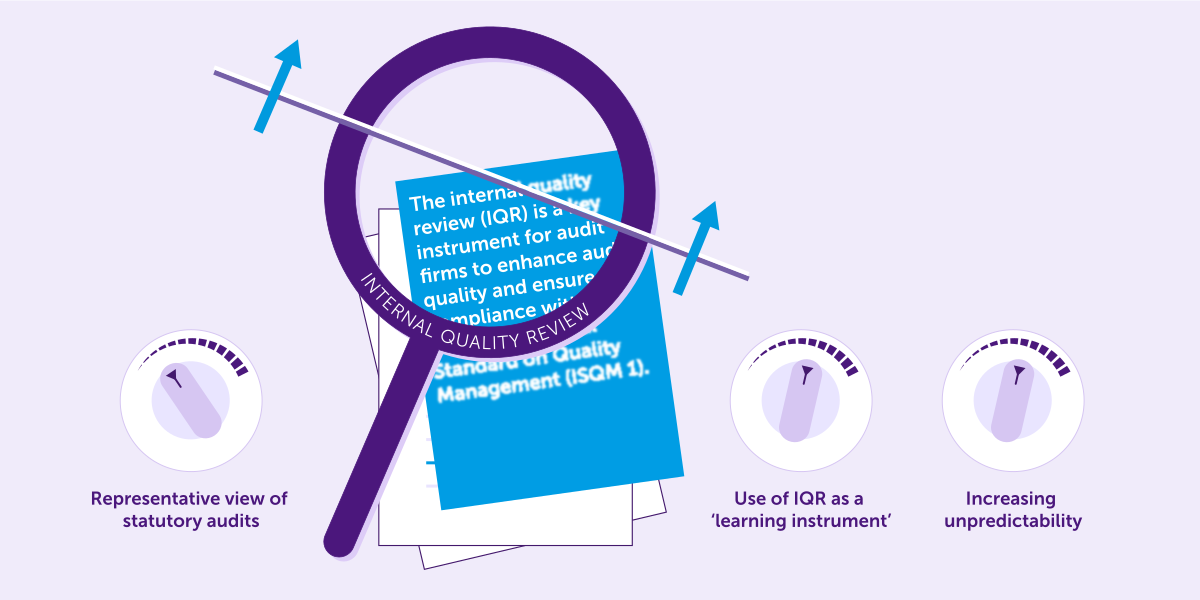
The internal quality review (IQR) should provide a clear and in-depth picture of the quality of completed statutory audits, while also identifying lessons learned and opportunities for improvement that enable audit firms to further enhance audit quality. The six PIE audit firms reviewed by the AFM conduct their IQRs in accordance with applicable laws and regulations, which is a positive finding. However, further enhancement of the IQR is needed. The AFM encourages the profession to strengthen the IQR and to use it deliberately as both a monitoring and learning instrument, drawing on the good practices highlighted in its report.
In short
- IQR as a tool for safeguarding audit quality and identifying deficiencies
- While the objectives of IQR policies are generally clear, the unpredictability and representativeness of file selection require improvement
- We encourage audit firms to further develop the IQR as both a monitoring and learning tool
- The AFM will share its findings with the sector and will take the resulting improvements into account in its supervisory activities
IQR as a tool for safeguarding audit quality and identifying deficiencies
The internal quality review provides audit firms with insight into the quality of completed statutory audits and supports the timely identification of deficiencies. It also contributes to the continuous improvement of internal quality standards. Furthermore, the IQR is a key component of the new International Standard on Quality Management 1 (ISQM 1), particularly in relation to monitoring and remediation activities. As part of the IQR process, audit firms annually select a number of engagement partners and audit files to assess whether statutory audits have been performed in compliance with applicable laws and regulations, professional standards and internal policies.While the objectives of IQR policies are generally clear, the unpredictability and representativeness of file selection require improvement
The IQR is widely used to identify deficiencies and risks in the execution of statutory audits. Its outcomes contribute to strengthening the learning capability of audit firms and support the continuous improvement of audit quality. The AFM views this positively.However, audit firms still fall short with regard to the principles of unpredictability and representativeness in their selection processes. Fixed selection routines, early communication of selections, a concentration on large or high-risk engagements, and the very limited scope of IQR reviews restrict insight into day-to-day audit practice. As a result, deficiencies in statutory audits may go undetected for too long or remain systematically outside the scope of review. At the same time, the AFM observed examples showing that greater unpredictability and representativeness are achievable, for instance by incorporating random selection techniques and elements of unpredictability into the selection process.
This observation is consistent with the findings in the AFM report IQR: an accurate instrument provides a fair picture, which notes that IQR selections frequently focus on high-risk or high-profile engagements and cover only around 1.5% of the total statutory audit population, limiting both representativeness and the ability to identify quality deficiencies across the broader portfolio.
We encourage audit firms to further develop the IQR as both a monitoring and learning tool
Based on its review, the AFM concludes that further strengthening of the IQR is necessary. Selection processes should be less predictable and more representative of the statutory audit portfolio so that the IQR can better fulfil its intended purpose: providing meaningful insight into the quality of completed statutory audits and helping firms assess whether their system of quality management is operating effectively. A more balanced and representative selection also enables audit firms to identify and address risks and deficiencies more effectively.The AFM also encourages audit firms to view the IQR as a learning tool. By analysing outcomes thoroughly and translating insights into targeted improvement initiatives, firms can strengthen their culture of continuous quality improvement and derive greater value from the IQR process.
The AFM will share its findings with the sector and will take the resulting improvements into account in its supervisory activities
Auditors play a vital role in maintaining confidence in financial reporting. Society expects audit firms to safeguard audit quality on an ongoing basis, identify risks promptly and address deficiencies effectively. For that reason, it is essential that the IQR functions as a robust and effective instrument. The AFM will share the findings of its review with audit firms and will incorporate firms’ responses and implemented improvements into its ongoing supervision. A strong and reliable IQR is an important prerequisite for increasing reliance on the effective operation of audit firms’ systems of quality management.Tags
Audit firmsContact for this article

Would you like to receive the latest news from AFM?
Subscribe to our newsletter, we will keep you up-to-date.